Recovery and Treatment for Concussion, Brain Fog, PTSD, Anxiety, and Depression
Navigating recovery from concussion, brain fog, PTSD, anxiety, and depression can be challenging. IHHT (Intermittent Hypoxic Hyperoxic Training) offers a promising solution to help eliminate brain fog, reduce anxiety and depression, and accelerate recovery from concussive injuries. The key lies in oxygenated blood flow to the brain.
When the body enters a state of hypoxia, its survival mechanisms activate. Following this, a surge of high levels of oxygen floods the system, targeting inflamed brain tissue caused by concussions or general inflammation from illness or diet. This oxygenation saturates the affected areas, promoting healing and restoring proper function.
IHHT and Neurodegeneration
IHHT facilitates cross-adaptation, whereby adaptation to one stressor grants resistance to another. This leads to alterations in protein expression, synthesis, and the functioning of antioxidant systems.
The neuroprotective effects of IHHT generate reactive oxygen species (ROS), which activate an extensive defense program. This process triggers gene expression (Nrf2) and the production of defensive enzymes that collectively provide robust antioxidant and anti-inflammatory cytoprotection.
Key Benefits of IHHT:
- Cerebral Oxygenation: Enhances short-term memory and attention in elderly patients experiencing mild cognitive decline (Wang et al., 2020).
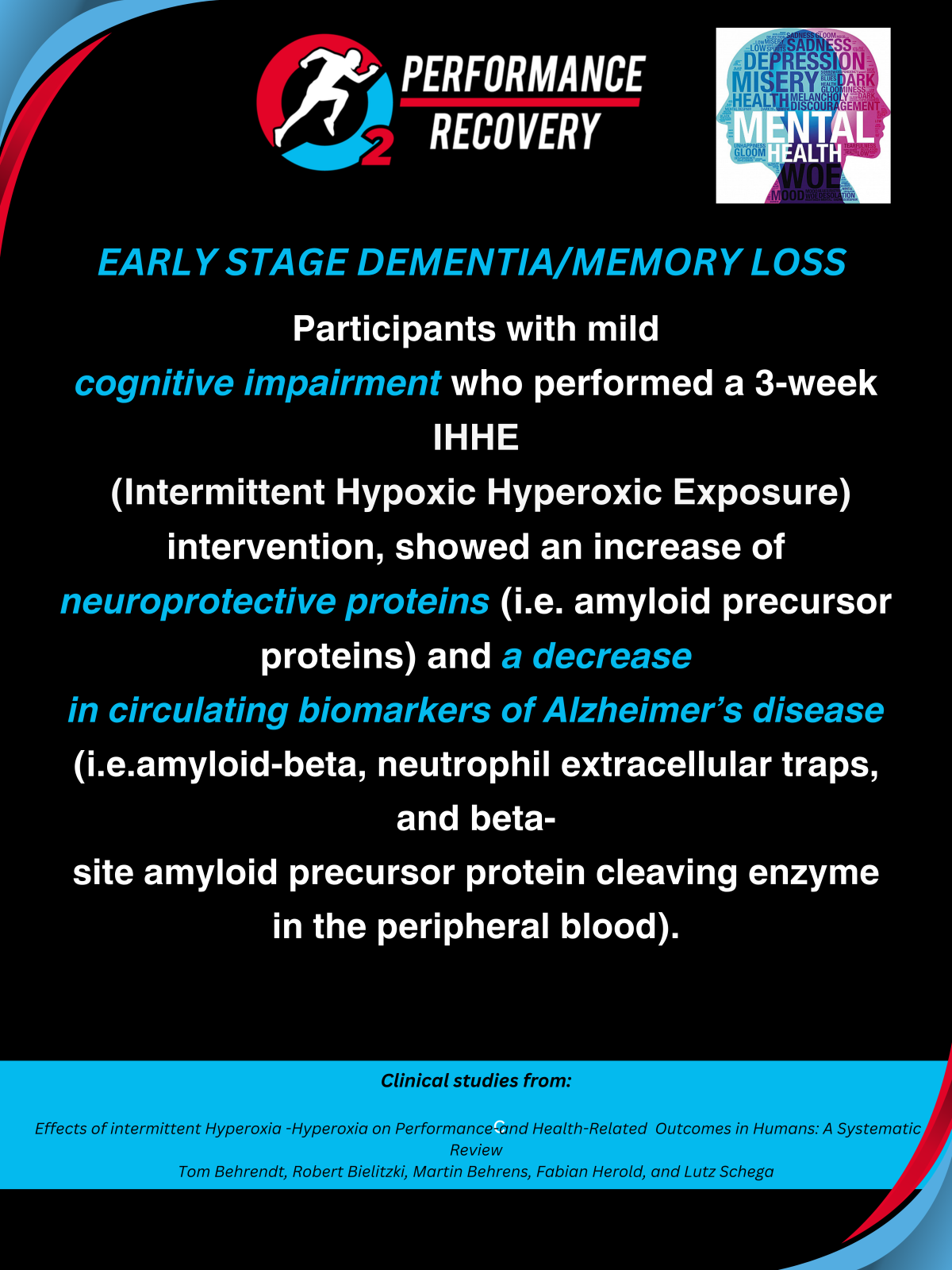
- Alzheimer’s Disease: IHHT has been shown to improve cognitive function and levels of circulating Alzheimer’s biomarkers in patients with mild cognitive decline, suggesting it may slow the disease’s progression (Serebrovska et al., 2019).
- Parkinson’s Disease and Depression: Research indicates that IHHT is beneficial for treating both Parkinson’s disease and depression (Serebrovska, 2003; Kang, 2021).
- Neuroprotection: Current data suggests that IHHT is a powerful, non-invasive tool for achieving reliable and stable neuroprotection (Rybnikova et al., 2015).
Specific Conditions and IHHT Effects
- Alzheimer’s Disease: Studies indicate that IHHT may improve spatial learning and memory, reduce AD-like pathology, and exert anti-inflammatory effects in the hippocampus, a critical region for memory. Additionally, IHHT is associated with increased nitric oxide production and decreased oxidative stress.
- Parkinson’s Disease: Preliminary research suggests that IHHT could provide benefits for patients experiencing Parkinson’s disease.
- Mild Cognitive Impairment: Early identification of individuals at risk, such as those carrying the APOE-4 gene (a significant risk factor for Alzheimer’s), allows for earlier intervention with IHHT, potentially slowing or preventing the onset of Alzheimer’s disease.